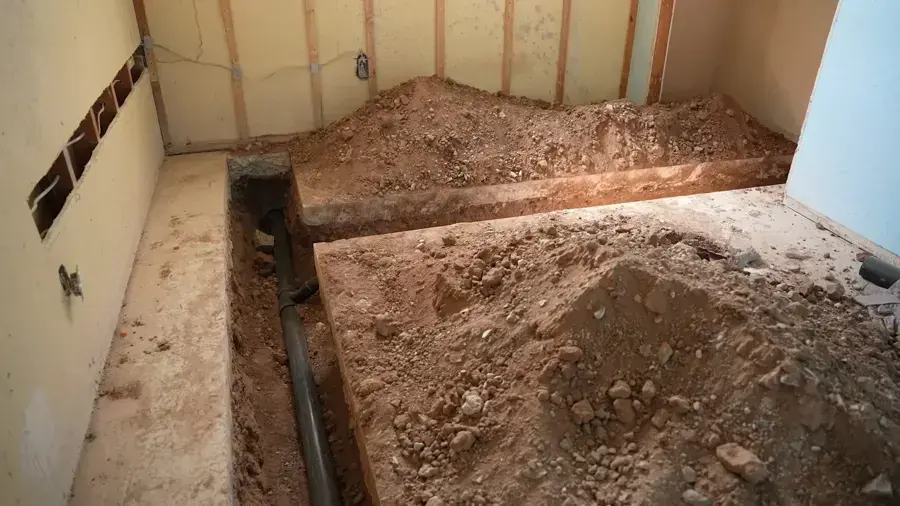
Most Rowlett homes sit on a concrete slab, and the supply pipes that feed the kitchen, baths and laundry run through or under that concrete, out of sight. When one of those pipes cracks, the water has nowhere to go but up into the floor or sideways into walls and cabinets.
Key takeaways
- Rowlett homes are mostly from the 1980s to the 2000s and nearly all are slab on grade, so a supply pipe leak is hidden under the floor.
- Expansive clay under a slab swells and shrinks, and that movement can stress the pipe beneath the concrete.
- A warm spot on the floor, a hissing sound with every tap closed or a water meter that keeps moving are the classic warning signs.
- A meter check with the whole house shut off is quick and tells a homeowner whether water is escaping.
- The plumber fixes the pipe; the restoration team extracts water, lifts wet flooring and dries the slab.
Why slab homes in Rowlett hide their leaks
Rowlett grew mostly in the 1980s through the 2000s, and the housing is mostly single family, many of them two story. Nearly all of it is built slab on grade, with no crawl space under the floor.
That design puts pipe inside or beneath the concrete. A pinhole or a split fitting there can run for weeks before anyone sees a stain.
The first clue is often a bill or a sound, not a puddle. A slab leak water damage job usually starts with that kind of quiet clue.
What expansive clay does under a slab
The ground under many Rowlett homes is expansive clay. It swells when it is wet and shrinks when it dries out, and a slab rides on top of that movement.
The shift is small, but a rigid supply pipe under the concrete does not bend as the soil moves. Over years, that stress can crack a joint or wear a pipe against gravel.
Why the water stays hidden
Concrete soaks up and spreads water before it shows at the surface. The leak may travel under flooring and into the bottom of walls long before a baseboard stains.
Warning signs a homeowner can see and hear
Most slab leaks announce themselves in small ways. A few of these together deserve a closer look.
- A warm or hot spot on the floor in a room with no heat source, which points to a leaking hot water pipe.
- The sound of running or hissing water when every faucet and appliance is off.
- A water meter dial that keeps turning after the whole house is shut off.
- A water bill that climbs with no change in how the household uses water.
- Flooring that feels damp, buckles, cups or lifts at a seam.
- Wet baseboards, a damp carpet edge or a stain that grows along one wall.
- Water showing at the edge of the slab outside the home.
A meter check before calling anyone
A homeowner can run a simple test without tools. It separates a leak from normal use and gives a restoration or plumbing crew something concrete to work from.
- Turn off every faucet, the ice maker, the washer and the dishwasher, and make sure no one flushes a toilet.
- Look at the water meter in its box and note whether the small leak indicator or the dial is moving.
- Close the home's main shutoff valve and look again.
- If the dial stops, the leak is inside the home. If it keeps moving, the leak sits between the meter and the shutoff.
- Write down what the dial showed and when, and take a photo.
What the restoration team does after a slab leak
A plumber finds the leak and repairs or reroutes the pipe. That is a separate trade from water removal, and the two jobs overlap in time, so the wet floor does not wait on the pipe repair.
The water side starts with water extraction from any standing or pooled water, then moisture readings across the floor to find how far it traveled.
Lifting and drying
Wet flooring is lifted where readings show water under it. Drying mats pull moisture up out of the slab, and dehumidifiers take it out of the air.
A slab dries slowly. The crew keeps taking readings until the concrete matches a dry reference reading, not just until the surface feels dry.
That is the work covered under structural drying.
Walls and cabinets nearby
Water at the slab wicks into the bottom of drywall. The lower few inches of wall are checked with a meter, and wet sections are cut out when drying in place will not work.
Flooring, cabinets and what gets replaced
What can be saved depends on the material and how long it sat wet.
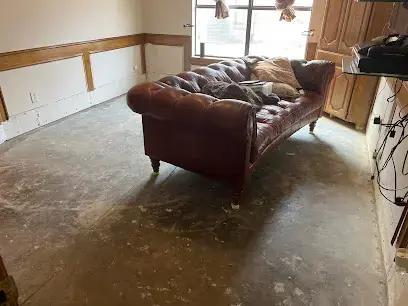
Floors installed over a leaking slab often hold water under them, so the surface can look fine while the underside stays soaked.
- Tile usually stays in place when the slab under it can be dried through mats and air movement, but loose or hollow tiles are lifted.
- Laminate and engineered wood swell at the seams and are normally removed.
- Solid hardwood sometimes dries with careful work, but cupping can come back days later.
- Carpet and pad are lifted; the pad is almost always thrown out.
- Cabinet bases are checked from below for swollen particleboard.
Insurance, records and timing
Coverage for a slab leak depends on the policy and the cause. Some policies cover the resulting water damage but not the cost of reaching the pipe, and the wording varies, so the homeowner should ask the insurer what applies.
Records help in every case. Photograph the floor, the meter reading and any damp spots, and keep the plumber's report and water bills in one folder.
Acting early matters because a slow leak spreads under more flooring each week. Shutting off the main, calling a plumber and booking drying all on the first day keeps the affected area small.
Questions
Can a slab leak happen in a newer Rowlett home?
Yes. Newer homes are less likely to have aging pipe, but shifting clay, a poor fitting or pipe rubbing against rock can cause a leak at any age.
Is a warm floor always a slab leak?
No. Radiant floor heat, sun through a window or a heating duct under the slab can warm a floor. A warm spot that appears suddenly, with the meter moving, is a stronger sign.
Should the water be shut off at the main?
If the meter test shows a leak, closing the main stops the loss while a plumber is called. Open a faucet at the lowest point later to drain the pipes if the plumber asks.
How long does a slab take to dry?
It varies with how much water got in and how long it sat. Concrete holds moisture longer than wood or drywall, so drying often runs several days with daily readings.
Who repairs the pipe, a plumber or the restoration company?
A plumber repairs or reroutes the pipe. The restoration team handles extraction, flooring removal and drying.