Water Extraction and Removal in Rowlett, TX
Every hour standing water sits, it climbs drywall and soaks into the slab. The extraction crew pulls it out with truck-mounted units, then sets drying equipment to the IICRC S500 standard.
(888) 527-9134Pull the standing water out now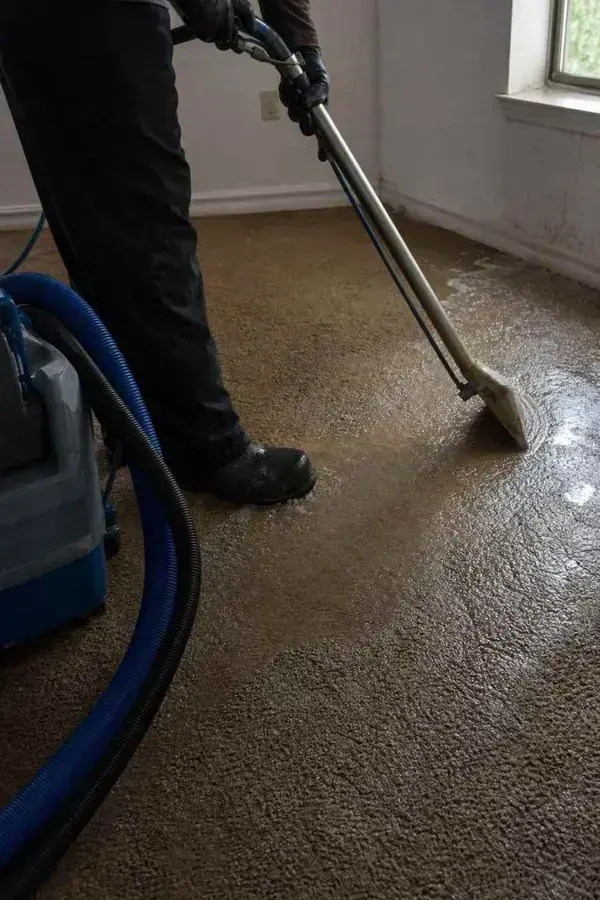
First steps for water extraction and removal in Rowlett
- 1
Shut off the source
Close the fixture shutoff or the main valve so no new water reaches the floor.
- 2
Clear the room
Lift small furniture, rugs and anything on the floor onto a dry surface.
- 3
Keep power safe
Switch off breakers for wet rooms only if the panel is dry and safe to reach.
- 4
Photograph, then call
Record the water level and the damage before anything is moved or thrown out.
How water extraction and removal work is done in Rowlett
Extraction is the cheapest drying there is. A truck-mounted unit removes far more water than air movers can evaporate, so the extraction crew pulls as much as possible before any drying equipment goes down. On Rowlett slab homes that means working carpet and pad, tile grout lines and the edges of laminate where water hides.
What does water extraction and removal cost in Rowlett, TX?
In Rowlett, TX, water extraction and drying typically run $800 to $15,000, depending on how much floor is wet, the water category, the flooring type and whether water reached the slab or walls.
One room, clean water
$800 to $3,000
- Truck-mounted extraction
- Carpet dried in place
- Three days of readings
Several rooms
$3,000 to $7,500
- Pad and baseboards removed
- Larger equipment set
- Walls checked by meter
Whole floor or Category 3
$7,500 to $15,000
- Flooring lifted
- Containment where needed
- Slab drying
Ranges are typical, not a quote: category of water, square footage, material class and how fast drying started move the number most. Run the Rowlett water damage cost calculator for a closer range.
The water extraction and removal process in four steps
The tech who does the walkthrough maps moisture before any equipment goes down, so the drying plan matches what is actually wet. Equipment stays until the readings say dry, not until it looks dry.
- 1
Map the water
Meters and thermal imaging show where the water went, not just where it pooled.
- 2
Extract
Truck-mounted units and weighted tools pull water out of floors and pad.
- 3
Remove what cannot dry
Saturated pad, Category 3 materials and wicked baseboards come out.
- 4
Dry and verify
Air movers and dehumidifiers run until readings match a dry reference.
How water is pulled out of Rowlett floors
The crew starts at the deepest water and works toward the dry edge. Weighted extraction tools press water out of carpet and pad, and wand passes continue until the wand pulls almost nothing.
Slab floors cannot be extracted through laminate or engineered wood. When water runs under a floating floor, the tech who does the walkthrough checks readings at the seams and decides whether boards come up so the concrete can dry.
- Carpet and pad: weighted extraction, pad lifted if the water is Category 2 or 3
- Tile and concrete: squeegee and wand passes, grout lines checked by meter
- Laminate and engineered wood: readings at seams decide lift or dry in place
- Baseboards: pulled where wicking shows on the meter
When extraction is not enough
Water that reached wall cavities, cabinets or the slab stays behind after the floor looks dry. The drying team maps it with pinless meters and thermal imaging, then opens only what the readings point to.
Category 3 water, such as storm water or sewage, changes the job: porous materials get removed rather than extracted and dried. See sewage backup cleanup for how that work is contained.
What happens after the water is out
Air movers and LGR dehumidifiers go down sized to the room's evaporation load. Daily readings track every wet material until it matches a dry reference in an unaffected room.
- A moisture map of every wet area
- Equipment placed to the class of loss
- Daily psychrometric readings logged for the claim
The EPA mold and moisture pages explain why wet materials need drying within 24 to 48 hours, and the Texas Department of Insurance explains how homeowner policies treat water damage.
Truck-mounted extraction can remove most of the free water from a soaked carpet in minutes, which cuts days off the drying that follows.
Water extraction and removal across Rowlett and the Lake Ray Hubbard area
The Rowlett restoration crew covers ZIP 75088, 75089 and 75030, from Downtown Rowlett and Lakeview Parkway out along Dalrock Road, Miller Road and Chiesa Road to Waterview and the Lake Ray Hubbard shoreline.
Nearby coverage reaches Garland, Sachse, Rockwall, Heath, Sunnyvale, Wylie.
Related water damage services in Rowlett
Water Extraction and Removal questions in Rowlett, TX
How fast should water be extracted?
As soon as possible. Water wicks up drywall and into the slab steadily, and mold can start within 24 to 48 hours on wet materials.
Can a wet carpet be saved?
Often, when the water is clean and extraction starts early. Pad soaked with Category 2 or 3 water is usually replaced, and the carpet is cleaned and dried.
Why not just use a shop vacuum?
A shop vacuum pulls surface water but not the water held in pad and grout. Truck-mounted units have far more suction and heat, so drying goes faster.
Does water under laminate dry on its own?
Rarely. Floating floors trap water on the slab, and the boards swell. Readings at the seams decide whether they come up.
How is extraction documented?
With photos before and after, a moisture map and the daily readings that show the floor reaching the dry goal.
Is extraction covered by insurance?
Extraction after sudden and accidental water is often part of a covered claim, but coverage depends on your policy, so check with your own insurer.
Still dealing with it?
Standing water in your Rowlett home? Get it pulled out now.
Water on the floor in Rowlett? Start the extraction now.
Every hour of standing water adds wicking, swelling and drying days.
(888) 527-9134Rowlett extraction crew, any hour