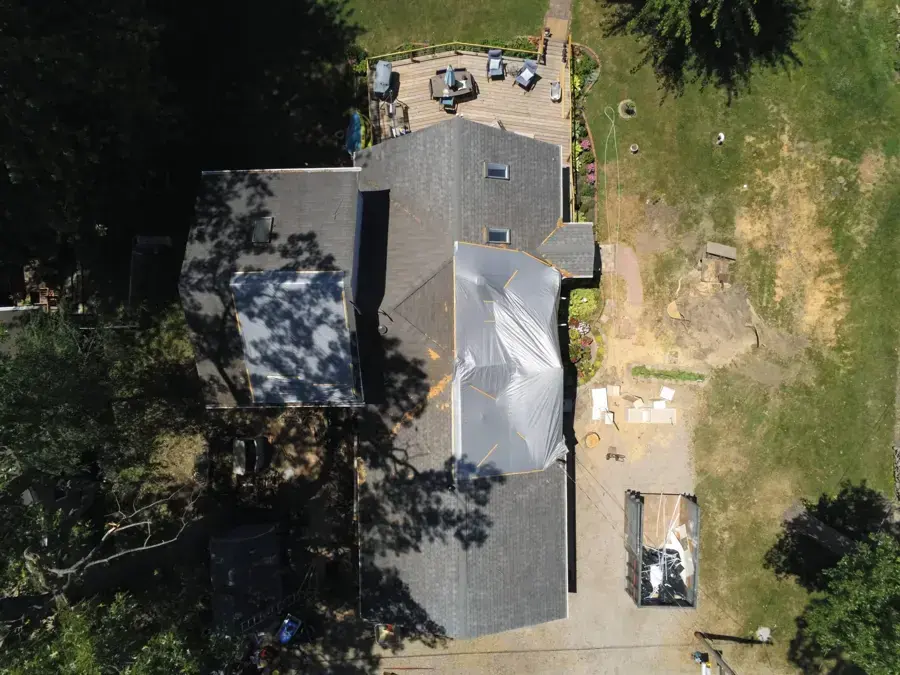
A tornado does not need to flatten a house to cause a water loss. A few missing shingles or a lifted section of decking is enough for the next rain to pour into the attic, soak the insulation and stain the ceiling below.
Key takeaways
- On December 26, 2015 an EF4 tornado struck Sunnyvale and damaged the Plantation RV park before moving northeast into Garland and Rowlett.
- The National Weather Service rated it the strongest of 12 tornadoes in North Texas that day.
- A county hazard plan draft notes that severe storms are common in Sunnyvale through spring and early summer.
- Roof openings let rain reach the attic first, and the ceiling is often the last place the damage shows.
- Tarping the opening, pulling wet insulation and drying the ceiling cavity keeps a roof loss from becoming a full interior loss.
What the December 2015 tornado did in Sunnyvale
On December 26, 2015, an EF4 tornado struck Sunnyvale and damaged the Plantation RV park. It then moved northeast into Garland and Rowlett.
The National Weather Service rated the Sunnyvale, Garland and Rowlett tornado the strongest of 12 tornadoes in North Texas that day. It is a regional event that residents still refer to when they talk about storm risk.
Why a tornado year still matters
Storms of that size are rare in any one spot, but wind damage is not. A Dallas County hazard mitigation plan draft says severe storms are common in Sunnyvale through spring and early summer.
The roof is the first part of a house to take the hit. Wind lifts shingles, tears flashing and can peel back decking, and debris can punch holes in what is left.
How a roof opening becomes a ceiling stain
Water does not stay where it enters. It runs along the roof deck, drips onto attic insulation and soaks in.
Insulation holds a lot of water, then releases it down onto the ceiling drywall.
A ceiling stain is often the last stage of the leak, not the first. By the time it shows, the attic above may already be wet across a wide area.
A storm roof leak job starts by finding where the water got in and how far it traveled.
- A brown or yellow ring on the ceiling marks where water collected and dried.
- A bulge or sag means the drywall is holding water and could drop.
- Paint that bubbles or peels points to moisture behind it.
- Drips from a ceiling light fixture or fan mean water has reached the wiring.
The first hours after a storm opens the roof
A homeowner usually cannot fix a roof in the rain, but can limit what comes in. The goal is to cover the opening, protect the inside and document everything.
Climbing onto a damaged roof is dangerous. Missing shingles, wet decking and loose debris make footing unreliable, so roof work belongs to someone equipped for it.
- Move furniture and valuables away from wet ceilings and place buckets under drips.
- Photograph the roof damage from the ground and every stain inside.
- Turn off power to any room where water is coming through a light fixture or outlet.
- Call a roofer to tarp the opening, and ask for a record of what was covered and when.
- Do not wait for the insurer's adjuster before covering the roof; protecting the property is part of the claim.
A sagging ceiling and what to do about it
A ceiling that bulges is full of water. Drywall that holds that weight can fall without warning.
Many restoration crews and homeowners relieve the pressure by making a small hole at the lowest point and letting the water run into a bucket. It is better done by a crew with protective gear than by guesswork, because the water can carry insulation and debris.
What gets removed
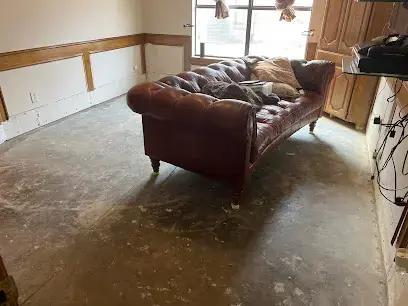
Wet insulation is pulled out of the attic, since it holds water and does not dry well in place. Ceiling drywall that is soaked or sagging is cut out in sections.
The cut is made past the stain edges, so the crew can see the back of the drywall and the framing.
What can be dried in place
Ceiling cavities and framing are dried with air movers and dehumidifiers when the drywall can stay. Moisture meters and a thermal camera show where water remains.
See the ceiling leak water damage page for how that work is sequenced.
Permits, repairs and the order of work
The Town of Sunnyvale says permits are required for all residential and commercial construction, and applications are completed online through a permit portal. A roof rebuild or major structural repair is a good reason to ask the Town what applies.
Inspection requests made by 3:00 PM are scheduled for the next business day, and emergency inspections are decided case by case. The Town can say whether a given repair needs one.
The sequence works best in a fixed order.
- Cover the roof opening so no new water gets in.
- Pull wet insulation and open wet ceilings so drying can start.
- Dry the cavities and the framing until readings are normal.
- Replace the roof covering, insulation and drywall once the structure is dry.
Garages, porches and the rest of the envelope
A roof is not the only opening in a storm. Wind can lift garage doors, break windows and tear porch roofs, and each of those lets rain in.
Walls can take water too. Water running down inside an exterior wall wets insulation and the lower part of drywall, which then needs readings before it is closed up again.
- Check window frames and garage doors for gaps after a storm.
- Look at the top of exterior walls inside the attic for staining.
- Inspect porch and carport ceilings for soft or stained spots.
- Look for water running down the inside of a wall below a roof opening.
Insurance, records and the whole picture
A storm loss is usually handled as a roof claim and an interior water claim together. Keep the roofer's tarp invoice, the restoration invoice, photographs and daily moisture readings in one place.
Ask the insurer what applies for wind damage and for water that entered through a storm opening, since policies word these differently.
The Sunnyvale water damage hub lists the other services for the town if the damage reaches walls, floors or an attached garage.
Questions
Does a small roof opening need immediate attention?
Yes. Even a small opening lets rain into the attic, and insulation can hold a surprising amount of water before a stain shows.
Can wet attic insulation be dried in place?
Usually not. It is removed because it stays wet and presses on the ceiling below.
Is a sagging ceiling an emergency?
Yes. It is full of water and can fall. Keep people and furniture out from under it and get it opened safely.
Who handles the roof and who handles the water?
A roofer covers and repairs the roof. A restoration team removes wet material and dries the structure.
How long do storm related ceiling stains take to fix?
Drying takes several days, and replacement of drywall and paint follows once readings are normal.