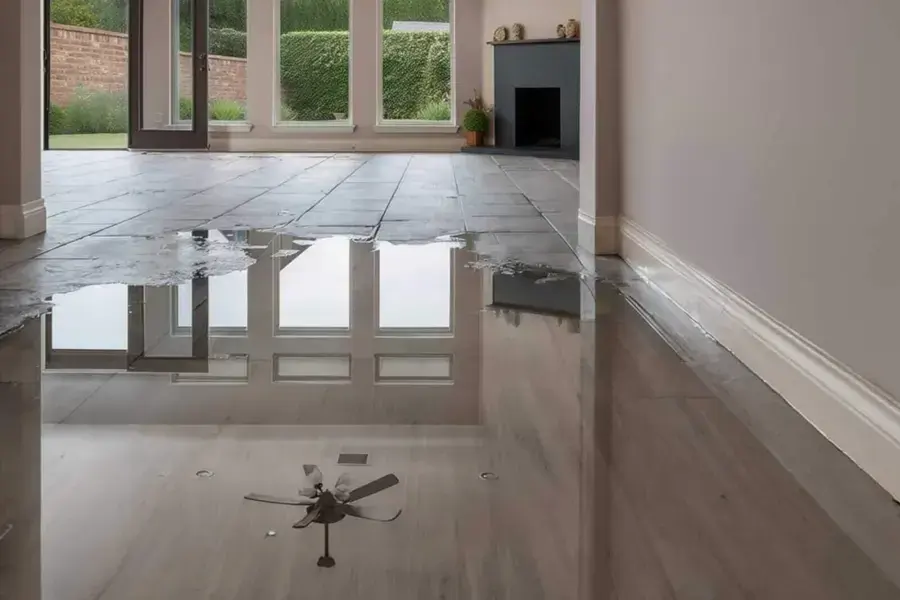
A flood in Rockwall does not always come from a river. In February 2018, days of heavy rain pushed runoff in Buffalo Creek into a neighborhood lake, and the overflow put water inside homes.
Key takeaways
- On Thursday, February 22, 2018, runoff in Buffalo Creek overflowed a neighborhood lake in Rockwall after days of heavy rain.
- Almost two dozen homes near Lakeside Drive were evacuated, and 15 to 20 of them had water inside.
- Homes on Eva Place across the lake were also saturated by muddy floodwater.
- The county advises Turn Around Don't Drown: 6 inches of fast moving water can knock over an adult and 2 feet can carry away most vehicles.
- Flood water that enters a home is contaminated, so removal, cleaning and drying all follow a different plan from a clean pipe leak.
What happened in February 2018
After several days of heavy rain, runoff in Buffalo Creek overflowed a neighborhood lake in Rockwall on Thursday, February 22, 2018. Almost two dozen homes near Lakeside Drive were evacuated, and 15 to 20 of them had water inside.
Homes on Eva Place across the lake were also saturated by muddy floodwater. No one was injured, and displaced residents were given hotel vouchers.
Why this kind of flood is different
The water came from a lake overflow after days of rain, not from a pipe or a roof. It arrived as muddy runoff, so it carried silt and whatever the ground had on it.
That is why a flood like this is cleaned and dried differently from a supply pipe leak.
Flash flooding and regular flooding in Rockwall County
The Rockwall County flood page separates two kinds of flooding. Flash flooding happens quickly during heavy rain.
Regular flooding comes from prolonged rain, lake overflow or dam failure.
The February 2018 event fits the second kind, with rain building for days before the lake spilled. Rockwall sits on the eastern shore of Lake Ray Hubbard, and the county is the smallest in Texas by area, so water has a short path from higher ground to low spots.
- Flash flooding: quick runoff from a heavy downpour.
- Regular flooding: prolonged rain, lake overflow or dam failure.
- Both can put water inside a home with little notice.
Safety rules the county gives
The county's message is Turn Around Don't Drown. The numbers behind it are plain: 6 inches of fast moving water can knock over an adult, and 2 feet can carry away most vehicles.
After a flood, the same caution applies at home. Water that has left the street may still be in a garage, a yard or a low room.
- Do not walk or drive through moving water to reach a flooded home.
- Stay out of rooms with standing water until the power to them is off.
- Treat every wet surface as unsafe until it is checked.
- Watch for damaged outlets, appliances and fuel containers moved by the water.
What lake and creek water leaves behind
Floodwater from a lake or creek is contaminated. It carries mud, runoff and sometimes sewage, and it soaks porous materials thoroughly.
A storm flood cleanup crew assumes that contamination and plans removal accordingly.
Materials that are removed
Carpet, pad, insulation and drywall that wicked floodwater are cut out and discarded. Mud is removed from hard floors, cabinets and framing.
Materials that are cleaned
Concrete, tile, framing and solid wood are cleaned and treated with an antimicrobial. Cabinets and trim are inspected case by case for damage that cannot be reversed.
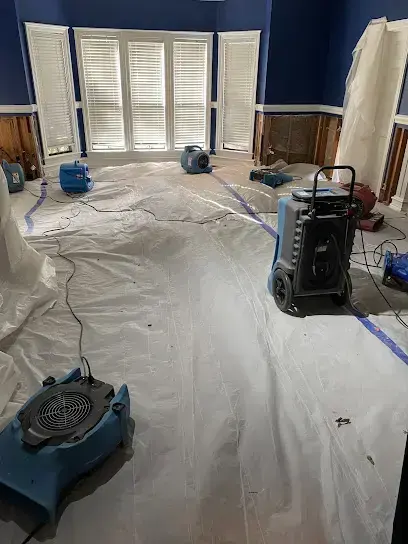
Drying a flooded house takes planning
Once the debris is out, the structure still holds water. Walls, framing and subfloors have to dry before anything is rebuilt.
Read more about structural drying and what the readings track.
A flooded house usually needs air movers and dehumidifiers running for days. The crew takes moisture readings each day and adjusts the equipment until the numbers match dry reference materials.
- Wall cavities are opened where insulation or drywall is wet.
- Floors and subfloors are dried to a measured reading.
- Heating and cooling equipment and ducts that sat in water are checked.
- Rebuilding begins only after the structure reads dry.
The first day back in a flooded home
Residents who were evacuated in February 2018 had to decide when it was safe to go back. A few checks help before anyone walks in or starts carrying things out.
The order of work is the same for most flood losses, and it starts with making the house safe to enter.
- Confirm with the city that the area is open and that utilities are safe to use.
- Have the electrical panel checked if water reached outlets or the panel itself.
- Photograph the high water mark and every wet room before moving anything.
- Open doors and windows when the weather allows, to start moving humid air out.
- Separate items that can be washed from items that must be thrown out.
Garages, yards and low rooms
Lake overflow tends to reach garages and ground level rooms first. Water that stands in a garage can wick into shared walls and under a slab edge, so the garage is not a separate problem from the house.
Stored items in a garage, such as paint, fuel and chemicals, can be moved by water and mix into it. They are set aside and handled with care, not poured down a drain.
Insurance, flood maps and what to ask
Standard homeowners policies often exclude flood from outside water, so a flood policy or a rider may be needed. A homeowner should ask the insurer which one applies before a loss, not after.
A January 5, 2024 Federal Register notice lists a FEMA flood hazard revision for the City of Rockwall. Flood maps change, so it is worth asking the insurer or the city how a given address is mapped today.
Keep photographs of every room and a list of damaged items. See the Rockwall water damage hub for the rest of the services in town if the loss reaches beyond the flood.
Rockwall has a humid subtropical climate, with hot, humid summers and generally mild to cool winters. Humidity slows drying outdoors, which is one more reason wet materials are removed fast and the inside is dried with equipment.
Questions
Where did the February 2018 flooding in Rockwall come from?
Runoff in Buffalo Creek overflowed a neighborhood lake after days of heavy rain, and the water reached homes.
How many homes had water inside?
Almost two dozen homes near Lakeside Drive were evacuated, and 15 to 20 had water inside.
Is lake overflow water safe to handle?
No. It is treated as contaminated, and protective gear is used when cleaning and removing it.
Does homeowners insurance cover flood water?
Many policies exclude flood. A separate flood policy or rider may apply, so the insurer should be asked.
How long does a flooded Rockwall home take to dry?
Several days is common, and the readings decide when the structure is dry.