Water Extraction and Removal in Garland, TX
Duck Creek flooded Garland homes in May 2015, and residents had about 20 minutes to leave. When water stands inside, the removal crew pulls it out of carpet, tile and concrete before it climbs the walls.
(888) 527-9134Standing water? Start the removal.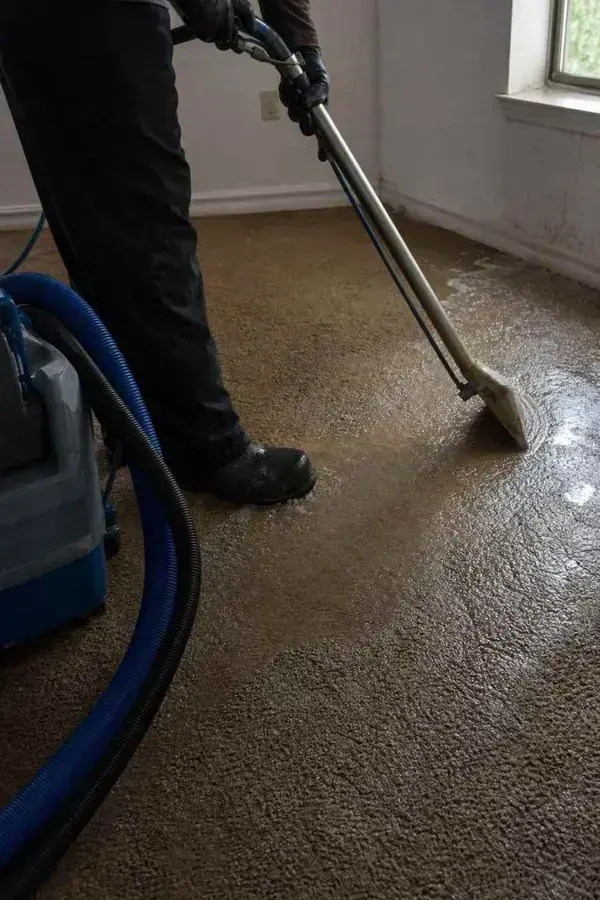
First steps for water extraction and removal in Garland
- 1
Stop the source
Close the main or the fixture valve so no more water reaches the floor.
- 2
Keep power safe
Leave outlets and cords near the water alone, and switch off breakers only if the panel is dry.
- 3
Lift small items
Move rugs, books and electronics off wet floors, and leave heavy furniture where it stands.
- 4
Photograph first
Record the water depth and each wet room before anything is moved or thrown out.
How water extraction and removal work is done in Garland
When Duck Creek flooded Garland homes in May 2015, residents had about 20 minutes to get out, and the wet work came afterward. Whatever the source, water left standing on a floor spreads into baseboards, pad and the bottom of the walls, so removal is the first job and drying comes second.
What does water extraction and removal cost in Garland, TX?
Garland, TX water extraction commonly costs $800 to $15,000. A shallow clean-water spill sits at the low end, while deep water, several rooms or Category 3 water raise the total.
One wet room
$800 to $3,000
- Clean water extracted
- Pad and carpet checked
- Readings each day
Several rooms
$3,000 to $7,500
- Water across floors
- Pad removed as needed
- Added drying equipment
Deep or dirty water
$7,500 to $15,000
- Category 3 handling
- Porous materials removed
- Containment and scrubbers
Ranges are typical, not a quote: category of water, square footage, material class and how fast drying started move the number most. Run the water damage cost calculator for a closer range.
The water extraction and removal process in four steps
The tech who does the walkthrough maps moisture before any equipment goes down, so the drying plan matches what is actually wet. Equipment stays until the readings say dry, not until it looks dry.
- 1
Moisture check
Meters and a thermal camera show where the water went beyond the visible puddle.
- 2
Pull the water
Truck-mounted units and weighted tools clear carpet, pad, tile and concrete.
- 3
Remove what will not dry
Soaked pad, wet baseboards and ruined drywall edges come out.
- 4
Hand off to drying
Air movers and dehumidifiers take over and readings track the result.
What extraction pulls out
Truck-mounted units move far more water than a wet vacuum, and a weighted tool presses carpet flat so the pad underneath gives up its share. Tile, vinyl and concrete are squeegeed and vacuumed, while hardwood is worked with low-profile drying tools so the boards are not scrubbed.
- Standing water across carpet and pad
- Pooled water on tile, vinyl and concrete
- Water trapped under cabinets and toe kicks
- Soaked baseboards and lower drywall edges
How the source changes the plan
Water from a supply pipe, a tank or an ice maker starts as Category 1, and flooring reached early can often stay. Washer and AC pan water is Category 2, so the pad usually goes. Creek or street water is Category 3, which means the storm flood cleanup approach, with porous materials removed instead of dried. Speed matters because wet drywall wicks water upward and wet pad starts to break down.
After the water is out
Extraction does not make a house dry. Carpet, the slab and the wall cavities still hold water, so air movers and dehumidifiers follow, as described under structural drying. Hidden pockets matter too. Water trapped under cabinets, behind baseboards and at the bottom of walls is found with meters, since a floor that looks dry on top can stay wet below. Daily readings decide when the equipment leaves, and the dated photos and logs go into the claim file.
Every service available across town is listed under water damage restoration in Garland.
A truck-mounted unit pulls water with a strength a household wet vacuum cannot match, so early extraction saves more flooring than the drying days that follow it.
Water extraction and removal across Garland and nearby towns
The Garland crew covers ZIP 75040 to 75044, 75048 and 75049, from Historic Downtown Garland and Duck Creek out to Firewheel and the Lake Ray Hubbard side of town.
The same service nearby: water extraction and removal in Rowlett, Sachse, Sunnyvale.
Related water damage services in Garland
Water Extraction and Removal questions in Garland, TX
How is extraction different from a wet vacuum?
A truck-mounted unit has far more suction and a much larger tank, so it clears pad and carpet fibers that a shop vacuum leaves soaked.
Does the carpet always have to be thrown out?
Not always. Carpet over clean water can often be lifted, extracted and dried, while the pad is usually replaced. Carpet touched by creek or sewage water is removed.
Why does water removal come before drying?
Air movers cannot dry a floor that still has standing water on it. Removing the bulk first cuts the load on the dehumidifiers and shortens the drying.
Is flood water from Duck Creek handled differently?
Yes. Creek water is Category 3, so porous materials it soaked come out and surfaces are treated. Extraction is still the first step, done with care around mud and debris.
Can extraction happen with the power off?
Truck-mounted units run off their own engine, so a tripped panel or a shut-off breaker does not stop the removal.
Will insurance pay for water extraction?
Coverage depends on the cause and the policy. Sudden leaks are often covered, while rising creek water usually needs separate flood coverage, so ask your own insurer.
Still dealing with it?
Water standing in your Garland home? Start the removal.
Standing water in Garland? Get it pulled out before it spreads.
Every extra day on the floor sends water further into pad, baseboards and walls.
(888) 527-9134Garland water removal, any hour