Structural Drying and Dehumidification in Garland, TX
Homes near Duck Creek, Rowlett Creek and Spring Creek may need structural drying after flood water or storm damage. The crew dries framing, concrete and wall cavities until meters match a dry reference.
(888) 527-9134Wet framing or slab? Start drying.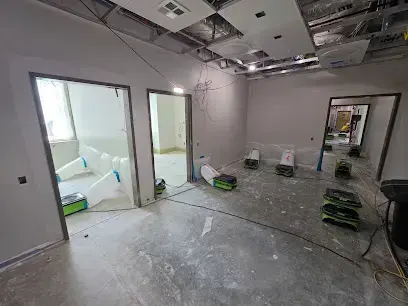
First steps for structural drying and dehumidification in Garland
- 1
Keep the equipment on
Leave air movers and dehumidifiers running, and do not switch them off to save noise.
- 2
Close the doors
Keep doors and windows closed in the drying area so humid air stays out.
- 3
Do not paint or patch
Hold off on repairs until the readings show the materials are dry.
- 4
Keep the logs
Save the daily readings and photos for the insurance file.
How structural drying and dehumidification work is done in Garland
Extraction removes the water that shows, and structural drying removes the rest. Water soaks into framing, the slab, the subfloor and wall cavities, and those materials give it up slowly. Homes near Duck Creek, Rowlett Creek and Spring Creek can see this after a flood, and any house can after a pipe or a roof leak.
What does structural drying and dehumidification cost in Garland, TX?
Garland, TX structural drying commonly costs $1,500 to $22,000. A small contained area sits at the low end, while dense materials, several rooms or a longer drying period raise the total.
One affected room
$1,500 to $4,000
- Air movers and a dehumidifier
- Moisture readings each day
- Short drying period
Several rooms
$4,000 to $10,000
- More air movers
- Wall cavities treated
- Moisture map updated daily
Whole floor or slab
$10,000 to $22,000
- Desiccant drying
- Dense materials dried slowly
- Extended monitoring
Ranges are typical, not a quote: category of water, square footage, material class and how fast drying started move the number most. Run the water damage cost calculator for a closer range.
The structural drying and dehumidification process in four steps
The tech who does the walkthrough maps moisture before any equipment goes down, so the drying plan matches what is actually wet. Equipment stays until the readings say dry, not until it looks dry.
- 1
Map the moisture
Meters and a thermal camera show what is wet and how deep.
- 2
Set the equipment
Air movers, LGR dehumidifiers and desiccants match each room.
- 3
Read every day
Moisture and room conditions are logged and equipment is moved.
- 4
Verify dry
Everything comes out once wet materials match the dry reference.
How the drying is planned
The IICRC S500 standard sorts each loss by water category and by material class, and the class sets how much equipment a room needs. Humidity in the air is managed too, since a dry floor under damp air will rewet materials. Dense materials such as concrete and hardwood hold water far longer than drywall. A moisture map, taken first, decides where air movers, dehumidifiers and desiccants go.
- Air movers across wet floors and walls
- LGR dehumidifiers pulling water from the air
- Desiccant units for dense materials
- Cavity drying systems inside walls
Reading the finish line
Containment keeps drying air inside the wet rooms, and doors stay closed so dry air is not wasted on the rest of the house. Dry is a number, not a feeling. The crew records moisture readings and room conditions every day, compares them with a reference taken in an unaffected room and moves equipment as areas dry. The job ends only when the wet materials match that reference. This work follows water extraction and pairs with slab leak water damage for concrete floors.
Why it matters for the claim
Daily logs, moisture maps and dated photos show what was wet and when it was dry, which is what an adjuster looks for. Equipment placement is recorded too, so the file shows which air movers and dehumidifiers ran in each room. For every service in town, see water damage restoration in Garland.
A wall can feel dry to the touch while the framing inside still reads wet, which is why readings, not touch, decide when equipment leaves.
Structural drying and dehumidification across Garland and nearby towns
Drying crews work all of Garland, ZIP 75040 to 75044, 75048 and 75049, from Historic Downtown Garland and Travis College Hill Historic District to Firewheel and the Lake Ray Hubbard side.
The same service nearby: structural drying and dehumidification in Rowlett, Sachse, Sunnyvale.
Related water damage services in Garland
Structural Drying and Dehumidification questions in Garland, TX
What is structural drying?
It is drying the framing, slab, subfloor and wall cavities that held water, not only the visible surface, with equipment and daily readings.
Why are there so many fans and dehumidifiers?
Air movers lift moisture from surfaces and dehumidifiers pull it from the air, so the two have to work together to keep drying going.
How long does drying take?
It depends on the materials and how much water they held. Dense materials take longer, and the readings, not the calendar, decide when it is done.
Can walls be dried without opening them?
Often, through small openings and cavity drying systems, when the water was clean and reached early.
Why is the house warm and noisy during drying?
Dehumidifiers and air movers give off heat and run constantly, which is normal and helps materials release water.
Is structural drying needed after a creek flood?
Yes. Once the contaminated materials are removed, the framing and slab still hold water and need drying.
Still dealing with it?
Wet framing or slab in your Garland home? Get it dried to a reading.
Water in the walls or the slab in Garland? Start the drying today.
Materials that only look dry can hold water for a long time, and readings tell the truth.
(888) 527-9134Garland drying team, any hour