Structural Drying and Dehumidification in Sachse, TX
Surface dry is not dry. The Sachse crew measures moisture in framing, subfloor and wall cavities and runs air movers and dehumidifiers until readings match a dry target.
(888) 527-9134Walls still wet? Get them dried.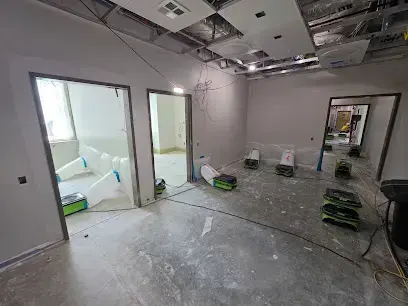
First steps for structural drying and dehumidification in Sachse
- 1
Do not close up walls
Leave wet walls and floors open until readings show they are dry.
- 2
Keep equipment running
Do not switch off air movers or dehumidifiers between visits.
- 3
Keep doors and windows closed
Closed rooms let dehumidifiers pull moisture from the air.
- 4
Record what you see
Note stains, smells or swelling and show them at the next visit.
How structural drying and dehumidification work is done in Sachse
Structural drying is the stage after water is removed, when moisture still sits inside framing, drywall, subfloor and concrete. It is the part of a water loss that decides whether trouble returns weeks later.
What does structural drying and dehumidification cost in Sachse, TX?
Structural drying in Sachse, TX commonly costs $1,500 to $22,000. The total follows how much framing and flooring is wet, how dense the materials are and how many days of equipment the readings call for.
Small, contained area
$1,500 to $4,000
- One or two rooms
- Air movers and a dehumidifier
- Readings each day
Several rooms
$4,000 to $10,000
- Walls and subfloor both wet
- Extra dehumidifiers added
- Longer equipment run
Dense or widespread
$10,000 to $22,000
- Concrete or framing soaked through
- Desiccant units added
- Extended daily monitoring
Ranges are typical, not a quote: category of water, square footage, material class and how fast drying started move the number most. Run the water damage cost calculator for a closer range.
The structural drying and dehumidification process in four steps
The tech who does the walkthrough maps moisture before any equipment goes down, so the drying plan matches what is actually wet. Equipment stays until the readings say dry, not until it looks dry.
- 1
Survey
Meters and a thermal camera map wet materials and set the class of loss.
- 2
Place
Air movers and dehumidifiers are set to match the wet area and the materials.
- 3
Monitor
Readings are logged every day and equipment is moved as areas dry.
- 4
Verify
Equipment is removed once materials read close to a dry sample.
What gets dried
Wood framing, drywall, insulation, subfloor and concrete each hold and release water at different speeds. The crew sets air movers to push air across surfaces and low grain refrigerant dehumidifiers to pull moisture from the air, with desiccant units for dense or cold spaces.
- Wall cavities, with panels or holes opened where needed
- Subfloor and framing
- Concrete floors, the slowest to release moisture
- Cabinet bases and trim
Class of loss drives the setup. A Class 1 loss touches little material and needs modest equipment, while Class 3 and Class 4 losses involve saturated ceilings, walls and dense floors and need more air movement and drier air. The crew assigns the class during the first survey and revisits it as areas dry.
Why the freeze warning matters
After Winter Storm Uri in February 2021 the city warned that leaks can appear days later. That is why moisture readings in walls and floors matter before an area is closed up: a surface that feels dry can still hold water behind it.
Measuring dry
Meters and a thermal camera check each room at the start and every day, and the readings are recorded. The structure counts as dry when materials read close to a sample from a part of the house the water never reached. Equipment placement is adjusted at every visit, because rooms dry at different speeds and machines left in a finished room waste capacity. See water extraction, slab leak water damage and Sachse water damage restoration.
More air movers do not always dry faster; placement and humidity control matter as much as equipment count.
Structural drying and dehumidification across Sachse and nearby towns
Structural drying covers all of ZIP 75048, from Woodbridge and Hudson Crossing to Sachse Farms, Cedar Creek Estates and Ranch Park, plus commercial space near Industrial Drive and Park Lane.
The same service nearby: structural drying and dehumidification in Rowlett, Garland, Rockwall.
Related water damage services in Sachse
Structural Drying and Dehumidification questions in Sachse, TX
How long does structural drying take?
Most contained losses need about three to five days of equipment. Concrete and dense framing take longer, and the end date comes from daily readings.
Why does equipment run when the surface feels dry?
Moisture can remain inside framing, insulation and subfloor even when the surface feels dry, and leaving it risks swelling, odor and mold.
Is the noise and heat normal?
Yes. Dehumidifiers and air movers run loudly and warm the room as they work, which is part of how they pull moisture out.
Does a freeze event change how drying is done?
Yes, because freeze leaks can show up days after the thaw. Walls and floors near cold spots are read again before they are closed.
Can concrete be dried?
Yes, with drying mats and desiccant dehumidifiers, though it takes longer than wood or drywall.
When can repairs start?
When readings show the materials are dry. Painting or rebuilding over damp framing tends to fail.
Still dealing with it?
Walls still damp in your Sachse home? Get them dried to readings.
Damp framing in Sachse? Start the drying and the readings.
Moisture left inside framing and subfloor keeps causing damage until it is dried and measured.
(888) 527-9134Sachse structural drying, any hour