Structural Drying and Dehumidification in Sunnyvale, TX
Sunnyvale mixes newer large homes with houses in the original Tripp, New Hope and Long Creek communities. Drying is set up room by room with moisture readings, then adjusted until every material reaches its goal.
(888) 527-9134Walls still wet? Get the drying started.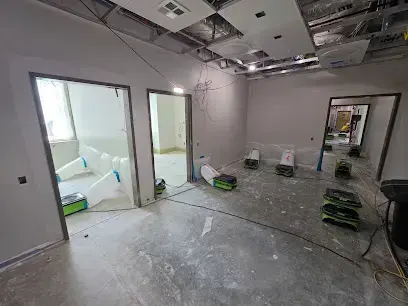
First steps for structural drying and dehumidification in Sunnyvale
- 1
Keep equipment running
Do not turn off dehumidifiers or air movers, since stopping early lets materials re-wet.
- 2
Close doors and windows
A closed space dries faster and more predictably.
- 3
Leave wall panels alone
Do not seal or paint wet surfaces before they read dry.
- 4
Keep the daily log
Let the team record readings so each day's progress is documented.
How structural drying and dehumidification work is done in Sunnyvale
After water is extracted, the structure still holds moisture. It sits in drywall, framing, subfloor and concrete, and it comes out only as vapor, which is the job of dehumidifiers and moving air.
What does structural drying and dehumidification cost in Sunnyvale, TX?
Sunnyvale, TX structural drying commonly runs $1,500 to $22,000, depending on the material class and how much is wet. A single area is low, while a slab or hardwood floor reaches the top.
Class 1 or 2, one area
$1,500 to $4,000
- Air movers
- Dehumidifier
- Daily readings
Class 3, several rooms
$4,000 to $10,000
- Wider equipment
- Wall cavities dried
- Longer run
Class 4, slab or hardwood
$10,000 to $22,000
- Desiccant drying
- Drying mats
- Extended monitoring
Ranges are typical, not a quote: category of water, square footage, material class and how fast drying started move the number most. Run the water damage cost calculator for a closer range.
The structural drying and dehumidification process in four steps
The tech who does the walkthrough maps moisture before any equipment goes down, so the drying plan matches what is actually wet. Equipment stays until the readings say dry, not until it looks dry.
- 1
Map
Meters and thermal imaging locate every wet material.
- 2
Set equipment
Dehumidifiers and air movers are placed to match each room.
- 3
Monitor
Readings are logged daily and equipment is moved as areas dry.
- 4
Verify
Equipment is removed once readings approach a dry reference.
Why drying is measured
The IICRC S500 sets a dry goal by comparing wet materials with a dry reference taken from an unaffected part of the building. Readings are logged daily, so the team can show an adjuster that each material reached its target before the equipment left.
The equipment and what it does
- LGR dehumidifiers pull water vapor out of the air
- Air movers push dry air across wet surfaces
- Desiccant units handle dense materials and low humidity
- Drying mats and injection systems reach behind floors and walls
Older and newer homes dry differently
Sunnyvale includes new homes such as those in Homestead, as well as houses in the communities that joined to form the Town in 1953. Different construction holds water in different places, so the layout of equipment follows what the meters show, not a standard room plan.
Drying follows extraction and removal. See water extraction for that stage, or the Sunnyvale hub for every service in town.
Equipment placement and wall openings
Air movers are aimed along walls and across floors so air moves over every wet surface, while dehumidifiers are sized to the room volume and the class of the loss. Moving air without removing the moisture only shifts it around, so the two always run together.
Wall cavities usually dry through small openings or by pushing dry air in behind the baseboard. A section is cut out only if readings show water trapped behind it, soaked insulation or a surface that cannot dry through.
Closing the house and running equipment is part of the job, because open windows in a humid season bring moisture back into materials that were nearly dry.
Structural drying and dehumidification across Sunnyvale and nearby towns
The drying team covers ZIP 75182, from Homestead and Stoney Creek to Sunnyvale Estates, Town East Park, Sunnyvale Centre and the Hattersville and Long Creek areas along Belt Line Road.
The same service nearby: structural drying and dehumidification in Rowlett, Heath, Garland.
Related water damage services in Sunnyvale
Structural Drying and Dehumidification questions in Sunnyvale, TX
Why does drying take several days?
Materials release moisture slowly as vapor, and dense ones such as concrete and hardwood release it slowest.
How is it decided that something is dry?
Readings are compared with a dry reference from an unaffected area, and equipment stays until the wet materials come close.
Why are dehumidifiers needed along with fans?
Fans move moisture off surfaces, but dehumidifiers remove it from the air so it does not settle back.
Can I run the air conditioner during drying?
Often yes, though the team may ask to keep it set so the equipment can work best.
Is drying equipment loud?
Air movers and dehumidifiers make noise, but it is temporary and part of getting the structure dry.
Will drying be on the insurance claim?
The daily logs and readings are kept for exactly that purpose, and your own insurer decides what applies.
Still dealing with it?
Walls and floors still wet in Sunnyvale? Get the drying going.
Wet structure in your Sunnyvale home? Start the drying now.
Moisture left in framing and subfloors keeps damaging materials, so drying should begin as soon as the water is out.
(888) 527-9134Sunnyvale drying response, any hour