Structural Drying and Dehumidification in Heath, TX
Removing water is only half the job. In Heath homes the crew dries framing, subfloors and wall cavities with air movers and dehumidifiers, taking readings until the meters match a dry reference.
(888) 527-9134Wet walls or floors? Get drying started.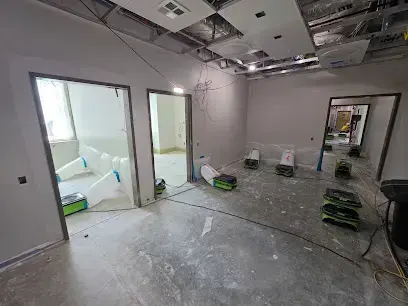
First steps for structural drying and dehumidification in Heath
- 1
Get the water out
Standing water is extracted first so equipment does not fight a wet floor.
- 2
Leave materials in place
Do not pull flooring or drywall until the crew has taken readings.
- 3
Keep the power safe
Use the equipment only on dry, grounded circuits the crew approves.
- 4
Photograph before drying
Capture wet areas so the claim file shows the starting point.
How structural drying and dehumidification work is done in Heath
Wet framing, subfloors and wall cavities keep holding moisture long after the standing water is gone. Drying follows any plumbing, storm or sewage loss, and the same method applies in Heath's single-family homes whatever the source.
What does structural drying and dehumidification cost in Heath, TX?
Structural drying in Heath, TX commonly costs $1,500 to $22,000. Wet square footage, the material class, the equipment count and the number of drying days decide the final figure.
One or two rooms
$1,500 to $4,000
- Walls and floor mapped
- LGR dehumidifier and air movers
- Daily readings
Several rooms
$4,000 to $10,000
- Subfloor and wall cavities dried
- Desiccant units added
- Longer equipment run
Dense or whole level
$10,000 to $22,000
- Hardwood or concrete involved
- Drying mats and ports
- Extended monitoring
Ranges are typical, not a quote: category of water, square footage, material class and how fast drying started move the number most. Run the water damage cost calculator for a closer range.
The structural drying and dehumidification process in four steps
The tech who does the walkthrough maps moisture before any equipment goes down, so the drying plan matches what is actually wet. Equipment stays until the readings say dry, not until it looks dry.
- 1
Map
Meters and a thermal camera locate every wet area.
- 2
Place
Air movers and LGR dehumidifiers are set to suit each room.
- 3
Monitor
Readings and humidity are logged daily and equipment is moved.
- 4
Verify
Equipment is removed only after the readings match a dry reference.
How drying is planned
The first visit sorts the loss by water category and class, then maps moisture with pinless meters and a thermal camera. The map decides how many air movers and dehumidifiers each room needs. Equipment is placed so air moves across wet surfaces while dehumidifiers remove the moisture they release.
- Water category and class recorded
- Moisture map of floors, walls and ceilings
- Equipment sized to each room
Why readings, not the calendar
A room can feel dry while the subfloor behind the surface still holds water. Each day the crew records material readings and humidity, moves equipment and decides what stays running. The job ends when the wet materials read close to a dry reference taken in an unaffected room.
Dense materials and tight spaces
Hardwood, concrete and framing release water slowly, so desiccant units, drying mats and small drilled ports reach places airflow cannot. For the extraction that comes first see water extraction in Heath, and for a leak under concrete see slab leak water damage in Heath.
Equipment you will see in the house
LGR dehumidifiers pull moisture from the air at lower humidity than standard units, while air movers push dry air across wet surfaces. Desiccant units, drying mats and injection ports handle dense or enclosed materials. Each machine is placed for a reason, and the crew records where it sits.
What the homeowner can expect
The equipment is loud and runs around the clock, doors to drying rooms stay closed and the house warms up a little. That is normal. The crew checks in daily, adjusts the setup and explains what the readings show, so the process is never a mystery.
Humidity and the rest of the house
Drying one room can push moisture elsewhere, so the crew also tracks the humidity in nearby rooms. Keeping the whole house within a normal range prevents the damp from simply moving down the hall.
Equipment pulled before the readings match is a common reason damp spots return.
Structural drying and dehumidification across Heath and nearby towns
Drying crews work across ZIP code 75032, from The Highlands of Heath and The Ridge to Antigua Bay, Buffalo Creek and Heath Golf & Yacht Club, including homes along FM 740.
The same service nearby: structural drying and dehumidification in Rowlett, Rockwall, Sunnyvale.
Related water damage services in Heath
Structural Drying and Dehumidification questions in Heath, TX
How long does structural drying take?
Small, contained jobs often take three to five days. Dense materials take longer, and readings rather than a calendar end the job.
What is an LGR dehumidifier?
A low grain refrigerant unit that pulls moisture from the air more efficiently than a standard model, which speeds drying.
Why do some materials need desiccant units?
Dense materials such as concrete and hardwood hold water tightly, and desiccants can draw out what ordinary equipment cannot.
Is it normal for the equipment to run all day?
Yes. Drying only works while air keeps moving and dehumidifiers keep removing moisture, so the units run until the readings match a dry reference.
What does IICRC S500 require?
It is the written water damage standard of the trade. It covers water categories, classes, equipment sizing and when a material counts as dry.
Can drying prevent mold?
Fast, complete drying removes the damp conditions it needs. Materials left wet are where it tends to start.
Still dealing with it?
Wet framing or subfloor in your Heath home? Get it dried to a standard.
Wet structure in Heath? Start the drying today.
Moisture left inside walls and floors keeps spreading until it is mapped, dried and verified with readings.
(888) 527-9134Heath drying dispatch, any hour